Why do we keep funding the status quo when we know systems need to change?
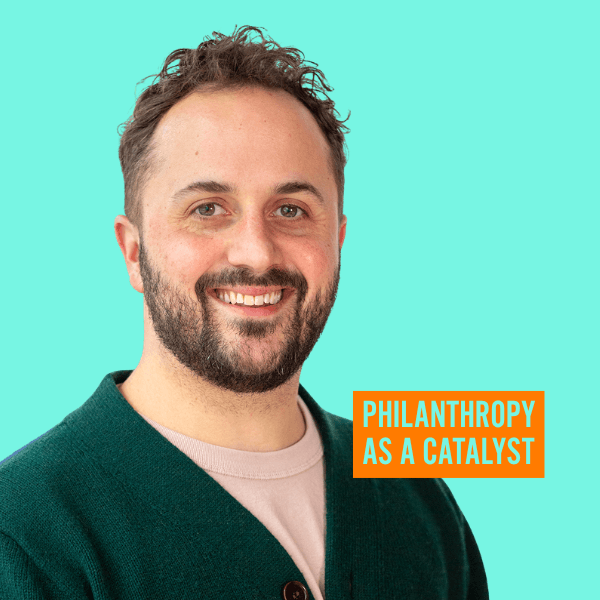
Blog by Ben Haber , our Managing Director, for our series 'Philanthropy as a Catalyst'
Thought Leadership
Blog by Ben Haber, our Managing Director, for our series 'Philanthropy as a Catalyst'
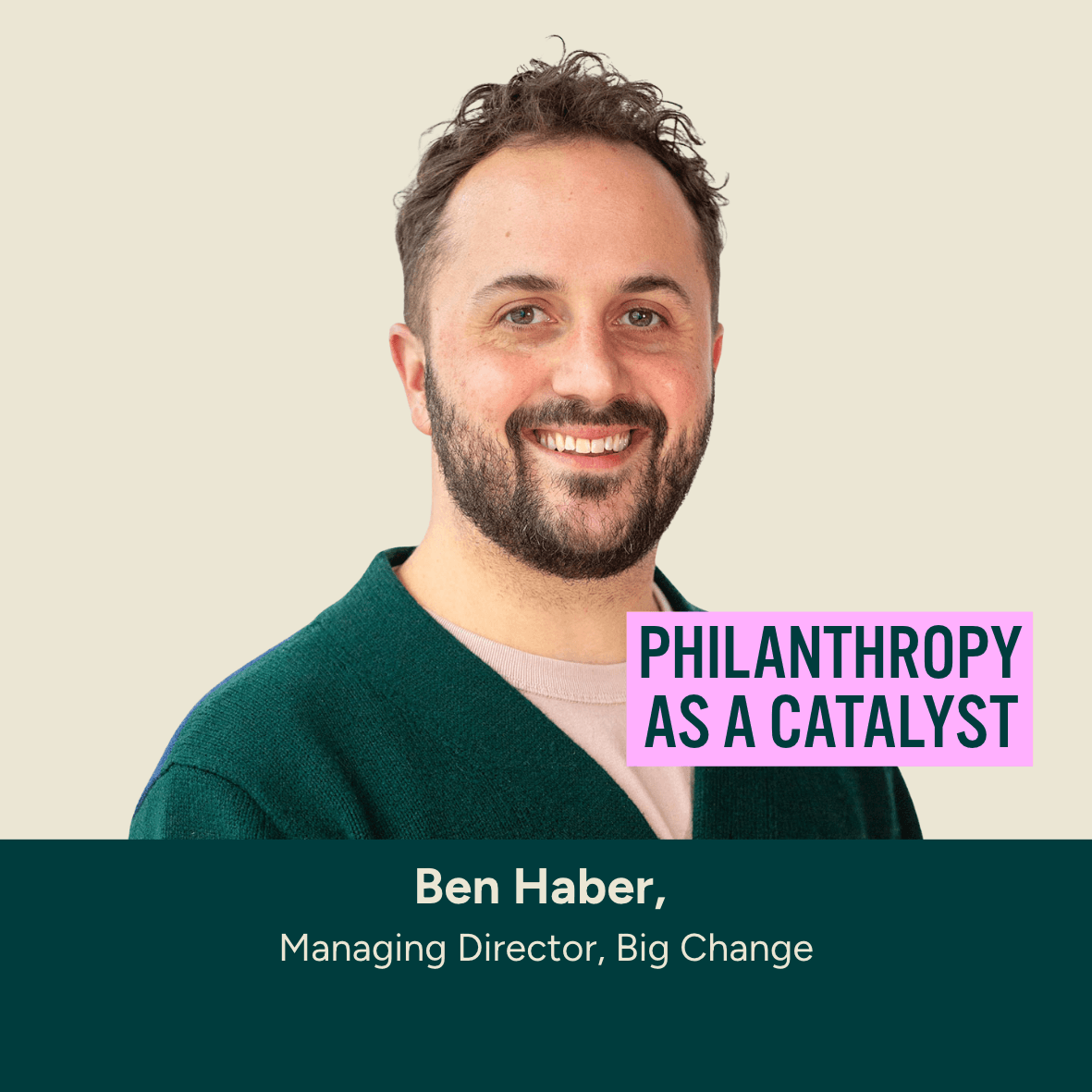
Community, connection, collaboration, belonging, peer support: all good things, and all in danger of becoming something that happens at the edges of funding rather than something central to changing how funding works.
At Big Change, we want our community to be more than a list of people who have received money from us. We want people with different experiences, ideas, and forms of knowledge to learn from each other and act together because community should be about connection and shifting power.
A grant can only go so far
Imagine two people working on entirely different problems: one rethinking how schools respond to children struggling with attendance, another exploring new approaches to housing for young people experiencing homelessness. Their projects differ, but they may wrestle with strikingly similar questions about trust, power, participation, and how institutions respond to people who do not fit neatly inside them. If we fund them separately, those connections may never surface; put them together, and they may recognise patterns, challenge assumptions, share their networks, and perhaps develop something neither could have built alone. The impact sits in the relationship between them.
We’re seeing this in action right now. Rethinking Assessment and the Chartered College of Teaching, two incredible organisations in our community, are working together to help schools recognise how young people who struggle in mainstream classrooms grow, beyond grades and attendance. Through a Big Change micro-grant, we helped them come together, collaborate and turn an idea into action. Impact sometimes lives in the relationships between people, and in what becomes possible when they connect.
Relationships are not an overhead
A programme has a budget, a project has outputs, a grant has milestones. Relationships are harder to price. What is the value of the person who introduced you to someone who changed your thinking, or the peer who helped you through a hard decision, or the conversation that made you realise your approach was wrong? Set against programme delivery, these can look like extras, but relationships are often part of the mechanism through which change actually happens. We should always challenge ourselves to think bigger and deeper. TransCap’s work has been an inspiration - systemic work is fundamentally relational, and the quality of relationships shapes not just collaboration but the information available, and how sensemaking happens. In other words, relationships create value; treating them as overhead is a category error.
Community has to create value for the people inside it, not only for the organisation convening it.
Ben Haber
Community redistributes knowledge
Traditional philanthropy puts the funder at the centre of the relationship: we hold the money, you hold the idea, and we decide whether it deserves investment. A genuine community disrupts this notion, because the funder is no longer the only source of knowledge in the room. The people we fund know things we don’t; young people know things older people don’t; practitioners know things researchers don’t; and communities understand their own systems in ways organisations can’t. This isn’t simply an argument for including more voices; it is an argument about where intelligence actually sits.
TransCap's concept of system intelligence is again useful because it treats information and sensemaking as organisational capabilities rather than an impact-reporting exercise. It makes the case for involving people in the system in making sense of what is happening rather than treating them as passive beneficiaries who supply data for someone else to interpret.
The question for philanthropy is not only whether we listen to the people affected by our funding, but whether they have real influence over what we do next, and how we see our role as a funder. As Andrew Speight, big changemaker, sums it up: “Big Change didn’t arrive with a fixed agenda or a prescriptive model. Instead, they asked the most important question: ‘What do you need to make this possible, and how can we help remove the barriers?’ They didn’t just fund a project; they validated a vision. With their support, I grew Emoco beyond one school. What stands out even more is the community Big Change creates. It gives you a sense of belonging.”
How do you make community valuable?
There is a danger in turning the idea of community into just a set of networking sessions, peer-learning workshops, a newsletter, and then declaring the community built. Relationships don’t work like this. People need reasons to come together, something to contribute, something to gain, and enough trust and shared purpose to make the relationship meaningful. Community has to create value for the people inside it, not only for the organisation convening it. This means asking whether we are creating something people genuinely value or simply asking people to participate in our version of what community looks like.
Hannah Underwood, a big changemaker, sums this up in her reflection on a Big Change gathering: “One of the things I most valued about the day was how quickly the usual power dynamics seemed to soften. There were people in the room who give money, people who receive money, people who influence systems, people who have been harmed by systems, people who build organisations, people who challenge organisations, and young people who reminded us why any of this matters in the first place. But the conversations did not feel hierarchical. They felt curious.”
Who gets to shape the collective
This is where the community becomes genuinely challenging. If a funder's community is simply a group of people who receive resources, the power relationship hasn’t shifted. If that community can influence what the funder notices, who it meets, what it learns, what it funds and what it stops doing, something more significant is happening because this requires a funder to give up some control. Accountability still matters, and someone still needs to make decisions, but sharing power is different from giving away responsibility. At Big Change, this shows up in our approach to intergenerational collaboration: young people in our community work with us to design funding models, weigh in on choosing the next grantees, sit on our board, and help recruit our next CEO.
We keep evolving what this means in practice, because the real test is whether the people in our community make us see differently, decide differently and act differently. If they do, the community stops sitting at the edges of funding and becomes part of the infrastructure for change.
Reach out to us at info@big-change.org
We'd love to hear from you!