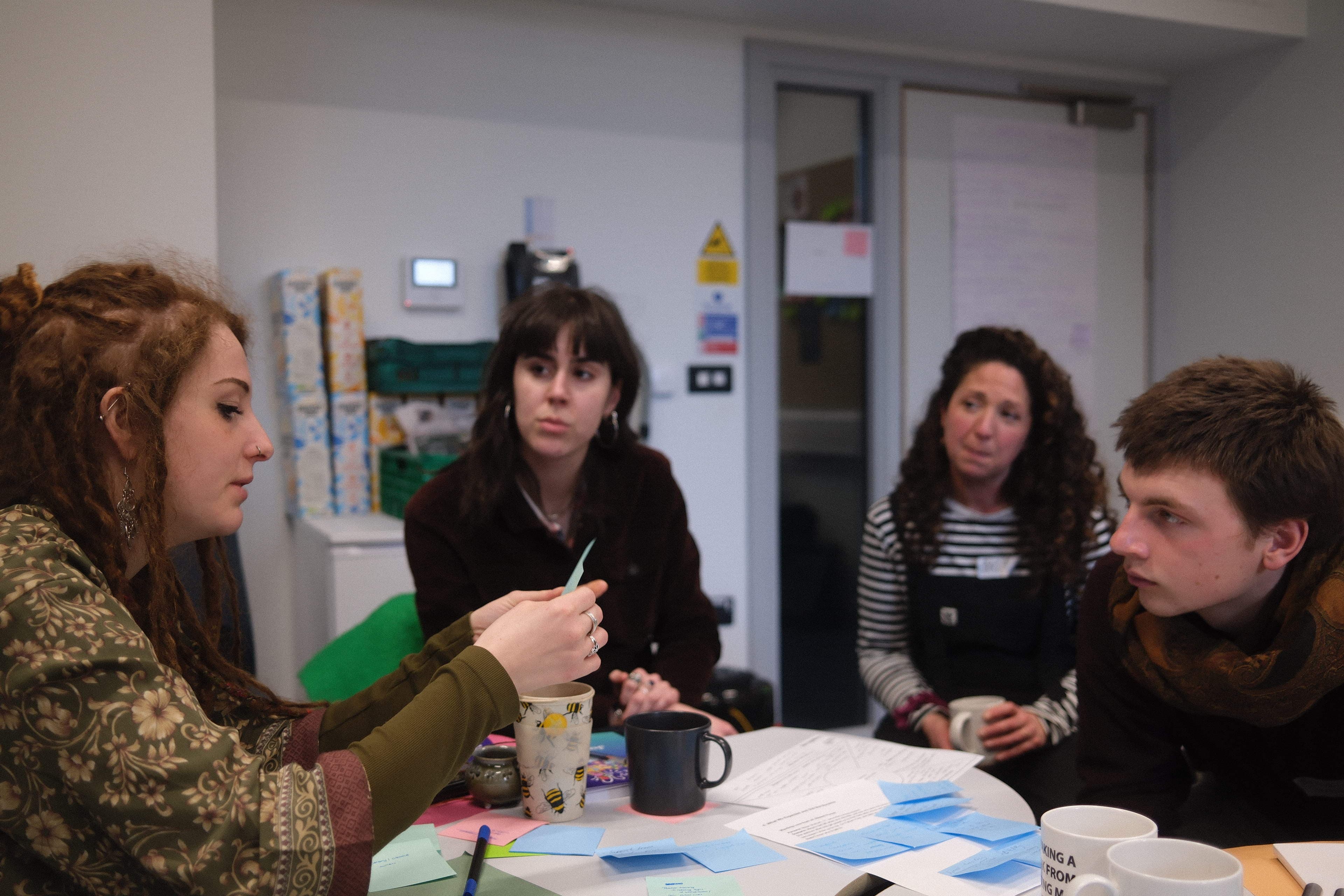
Backing Young People to Lead
How the Ferdinando & Luigi Innocenti Foundation is sparking joy in partnership with Big Change.
Blog
Big Changemaker Hannah Underwood shares what a day in the Bedfordshire countryside taught her about systems change, the power of community, and what funders could do differently.
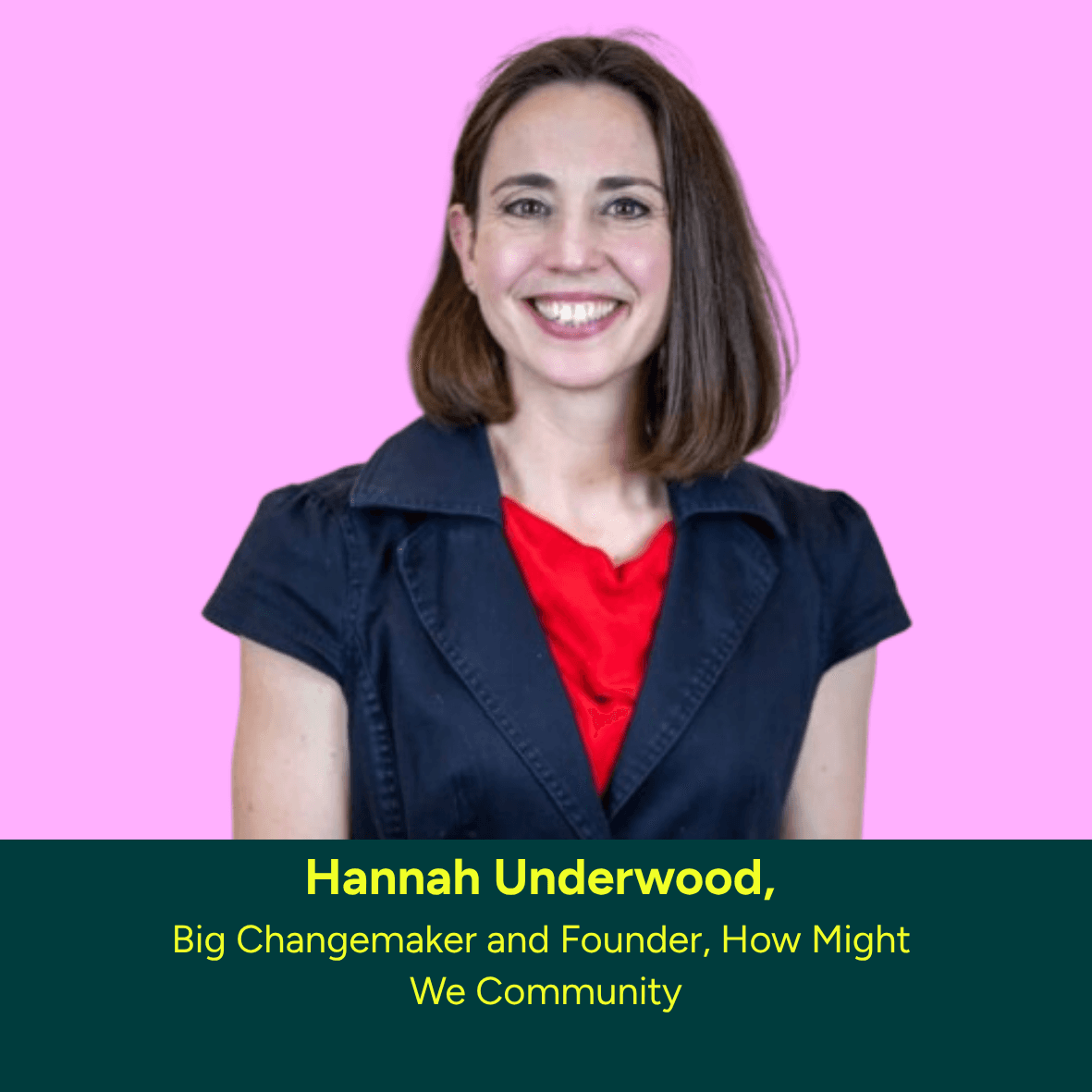
At 4:15am, my alarm went off in Northumberland. Several trains, one full day in the Bedfordshire countryside, and one late journey home later, I was tired, slightly over-stimulated, and very glad I had made the trip.
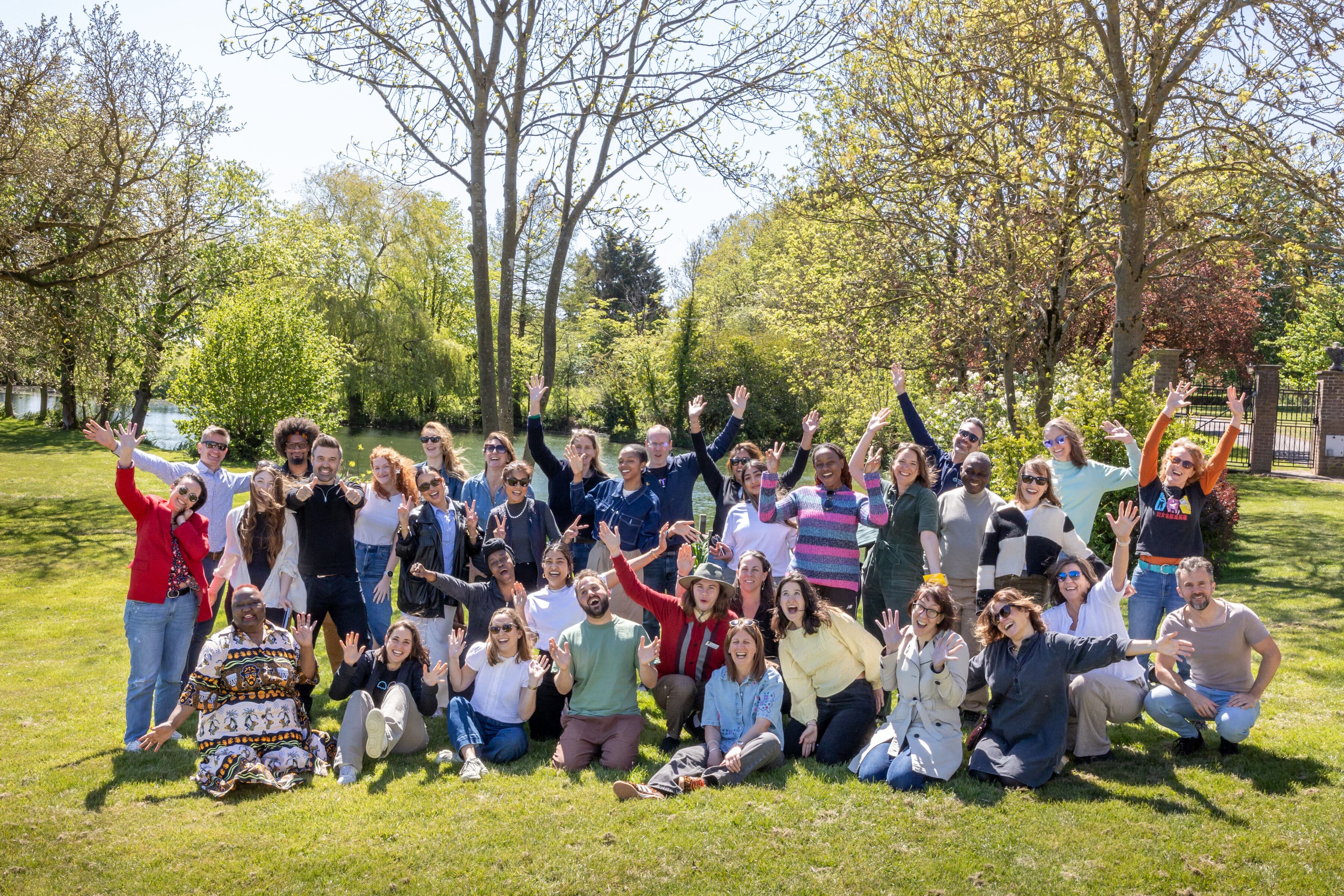
I had spent the day at Big Change’s Big Day Out alongside their community of “Big Changers”: funders, charity leaders, social entrepreneurs, systems-change thinkers, young people, donors and people working in all sorts of different ways to create change.
It would be easy to describe the day through its loveliest ingredients. The beautiful countryside. The generous hosts who opened up their home. The dogs. The food. The views. The walks through gardens and fields. And all of that mattered. The setting created a very particular kind of space. Peaceful. Open. Human. A long way away from windowless meeting rooms, PowerPoint fatigue and transactional networking.
The importance of sitting with complexity
But underneath the loveliness of the day was something much more powerful. We were invited to sit in the complexity of systems change. Not tidy it up. Not jargon it away. Not pretend there was a neat five-step model hiding somewhere in the long grass. Actually sit in it.
We reflected on the systems each of us touches, the ways in which those systems are broken, and what it might take to change them. More importantly, we were brave enough to explore our own roles in unintentionally perpetuating some of the very problems we want to solve. That is not always comfortable work. It is much easier to talk about "the system" as though it exists somewhere over there, making poor decisions without our involvement. But systems are made of people.
People with power.
People without enough power.
People with good intentions.
People making trade-offs.
People navigating constraints.
People trying to survive inside structures they did not design.
People, if we are honest, like us.
That honesty felt important.
One of the things I most valued about the day was how quickly the usual power dynamics seemed to soften. There were people in the room who give money, people who receive money, people who influence systems, people who have been harmed by systems, people who build organisations, people who challenge organisations, and young people who reminded us why any of this matters in the first place. But the conversations did not feel hierarchical. They felt curious.
We had time to connect properly, to have the kind of conversations where previously crossed paths, shared histories and unexpected connections started to surface. I found myself making all sorts of confessions to people I had only just met, which is either a sign of a very well-designed gathering or a warning that I should be supervised more closely near coffee. Probably both.
Big Change shared some brilliant data visualisations exploring their community and grant-making over the years. They looked at their work through different lenses, clusters, categories and measures of success, asking better questions about where change happens, how progress is made, and what patterns might be emerging across the people and organisations they have backed. I loved this partly because I am a data geek and cannot be trusted near a good visualisation without getting over-excited, but mostly because it showed Big Change doing something I think more funders need to do: using data not simply to prove impact, but to learn. To notice patterns. To understand relationships. To ask what might be possible if individual grants, organisations and changemakers are seen not as isolated interventions, but as part of a wider living system.
That is where I see such strong overlap with my own work through How Might We Community. At How Might We Community, I am exploring how we build shared data, evidence and learning infrastructure across places and cohorts, particularly with charities, funders, social enterprises and others working on entrenched social challenges. The aim is not data for data's sake. It is about helping people learn together, act together and make better decisions together.
Big Change and the compounding power of a funding community
The Big Day Out reinforced something I have been thinking about a lot. Money can be spent. Energy can run out. Attention can be exhausted. But knowledge, insight and connection behave differently. When shared well, they do not dilute. They compound. That feels like one of the most underused levers for social change.
What would it look like if more funders intentionally invested in the conditions that allow learning, trust, data, relationships and courage to compound across a community? What if the real value of a funding portfolio is not only the impact of each individual grant, but the collective intelligence, relationships and momentum that can build between the people and organisations within it? What if a funder's community is not just a nice additional benefit, but a form of infrastructure in its own right?
This feels particularly relevant to Big Change. They have always seemed willing to look beyond traditional boundaries, not simply interested in organisational form or neat categories, but in people, purpose and how change actually happens. They have backed charities, social enterprises and purpose-driven businesses. That matters, because some of the most interesting work for social change does not always fit neatly into conventional funding boxes. I wish more funders were that forward-thinking. In a world where social problems do not respect organisational boundaries, funding models cannot afford to be too rigid either. There is a real opportunity for more collaborative funding, especially in place: linking early-stage risk takers, local relational grantmakers, funders thinking about legacy, organisations with convening power, corporate partners with pro-bono talent, and those with the resources to stay in it for the long haul.
The conversations on the day suggested Big Change is actively asking important questions about its future role in systems change. How might it seed change from the grassroots up, in places as well as people? How might it unlock more power from the unison of its community? How might it support more intentional data sharing, shared learning and cohort-based approaches to change? Those questions feel timely and full of possibility.
Long roots, long journeys: why sticking with the work matters
There was also a beautiful full-circle moment for me. The Key, the youth charity I led for 17 years, was Big Change's second ever grant back in 2013. My own connection with Big Change began when I randomly met one of their founding trustees while climbing a mountain on my honeymoon. He and his wife were on honeymoon too, obviously. We connected over our shared passion for creating change with and for young people. Thirteen years later, I found myself standing on a lawn in Bedfordshire, taking part in an exercise where we lined up in order of when we had first connected with Big Change. It turned out I had the longest association. And had travelled the furthest that day. There is probably a metaphor in there somewhere about long journeys, deep roots and sticking with the work. But I will spare you.
Money can be spent. Energy can run out. Attention can be exhausted. But knowledge, insight and connection behave differently. When shared well, they do not dilute. They compound.
Hannah Underwood
Big Change may not be the biggest funder in financial terms, but it has something incredibly valuable: a trusted, diverse and deeply purposeful community of changemakers. That community holds knowledge, resources, relationships, lived experience, influence, imagination and courage. The opportunity now is to keep asking how that power can be used even more intentionally: how can learning be shared rather than lost? How can data become a tool for collective insight rather than individual reporting? How can we learn together in ways that shift power and strengthen action? How can a community of changemakers become more than the sum of its parts?
I left Bedfordshire with peace, frustration and deep stirring hope. Peace from the place. Frustration because the problems are stubborn. Hope because when knowledge, insight and connection are shared so generously, they do not just travel further. They create the conditions for change to take root for years to come.
Reach out to us at info@big-change.org
We'd love to hear from you!