How do we create lasting change for young people?
We can't change systems in isolation, they change when people come together. Our CEO Essie North reflects on how our next chapter is about building a…
Blog
Kathryn Scott, Trustee at Big Change, shares ten reasons for hope in the Schools White Paper: an unashamedly optimistic look at vision, systemic transformation, and the power of putting children and communities at the heart of learning.

Before the White Paper was released on Monday, I was worried.
A lot rides on these flagship pieces of policy making. Ministers are in a damned-if-you-do, damned-if-you-don’t situation. If a paper lands wrong, a negative narrative can drown out the good intention and an opportunity for genuine change is lost. I pledged to colleagues that whatever the outcome, I would write the most optimistic and hopeful response to the paper I could muster.
Call me naive… that’s sort of the point. A week on, the dust has settled. The response to Bridget Phillipson, Secretary of State for Education of the United Kingdom and Georgia Gould's, Minister of State (Minister for School Standards), paper has been ‘cautiously optimistic’, to use a phrase that is so over-used by policy wonks like me in pieces like this that it just autocompleted as I wrote. But a pledge is a pledge, so here are the top ten things to like about the white paper, according to an unashamedly hopeful pragmatist:
1. There’s vision
The reason we were so anxious about this paper is that it is about the future of our children’s education, which shapes the future of everything thereafter. High stakes. For that reason it needed to go beyond rejigging targets and standards, which it does, by celebrating childhood and outlining a vision of a lifetime of learning to develop empowered, confident citizens. There is vision in every chapter.
2. It understands incentive structures
One of the biggest challenges school leaders currently face is that doing the right thing, particularly for disadvantaged children, is often not the smart thing in terms of measuring outcomes. A sentence on aligning incentives with ambition so ‘schools will be rewarded for supporting the progress of students who face the highest barriers’ feels like one of the most important in the whole paper.
3. There’s a clear and equitable statement on accountability
Ambition is high; Phillipson talks of her ‘uncompromising expectations’ and the paper is clear that this means both higher standards overall and halving the disadvantage gap by bringing up the lowest groups. Like most policy goals, achieving this is much harder than saying it. But saying it with clarity is welcome.
4. There’s space for listening and learning
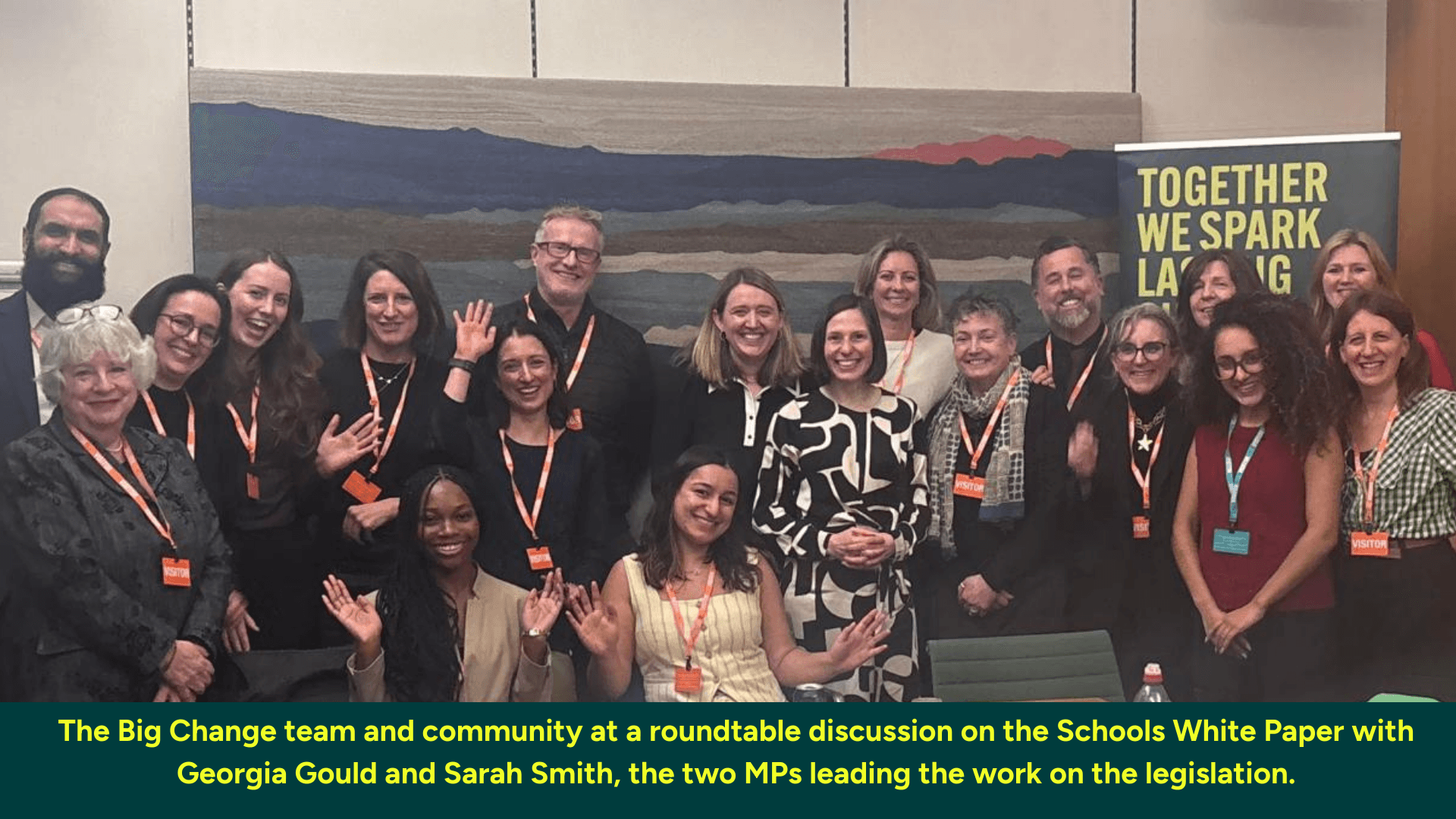
The scope of this policy area is huge; 118 pages is a lot for anyone to take in. The DfE team has acknowledged that by launching an in-depth SEND reform (Special Educational Needs and Disabilities) consultation alongside the white paper. I’m no SEND expert, but I hope that this process will create opportunities to flush out any perverse incentives or unintended consequences by running proposals past those with the most experience, with genuine space to shift course.
5. No more false dichotomy
I don’t love 'achieving and thriving’ being framed as ‘two sides of the same coin' as it’s more complex than that. But a shift from ‘narrow to broad’ education and for children to achieve ‘strong foundations of knowledge’ alongside ‘debating, questioning, challenging and pursuing their own inquiry’ is the right direction for our future classrooms.
6. It’s human
It’s really hard and messy to measure something as intangible and complex as belonging. It’s even harder to work out how to improve it. But children and young people are complex humans with all manner of messy feelings, so getting their education experience right means meaningfully engaging with this challenge. This area of policy making is psychological, relational, entirely necessary and potentially game-changing. I’ll be watching closely as the DfE takes it on.
Putting cynicism aside to appreciate the effort it takes to generate a thoughtful vision for a better future feels like a fairly radical act in these complicated times.
Kathryn Scott
7. It’s systemic
For all the systems thinkers out there, this paragraph is for you: “Excellent individual practice can transform the outcomes of individual children. But it takes an excellent system to transform the outcomes of communities and generations of children.” For too long there’s been a ‘hero teacher working against the odds’ narrative, which might make a good plot for a film, but is unsustainable and downright exhausting.
8. Schools as part of communities
That systems lens extends to seeing schools as part of a broader web of place-based public services in a community. Repeated recognition of links to early years, family hubs and colleges is welcome, as is setting out clear roles and responsibilities for local government. I like the acknowledgement that the road to national renewal runs through our schools, but more importantly the recognition that it doesn’t stop at the school gates. There’s huge potential in leveraging schools’ roles as anchors in their communities if this can be effectively supported.
9. Enrichment for all
Re-engaging children in their education means giving them opportunities to explore who they want to be and what they like to do. It’s about creating joy and meaning as well. The white paper’s commitment that enrichment will be not just for those who can afford to pay, but a common entitlement for all is an important step towards equality of opportunity. I was also pleased to see play, nature, outdoors and adventure appear in the policy, but there is definitely scope to turn up the volume on these.
10. A sprinkle of humility
A repeated phrase that resonated was that this white paper is an ‘ask of the sector’. Something in that framing, if read with the optimistic lens I’m aiming for, suggests reciprocal respect. These shifts simply won’t work unless they are delivered in partnership with the profession, and recognising that what they are asking for is a lot, but that we’re all in it together is a grown-up approach to policy-making.
Are there gaps and omissions, risks and potential mis-steps? Of course. But putting cynicism aside to appreciate the effort it takes to generate a thoughtful vision for a better future feels like a fairly radical act in these complicated times.
Reach out to us at info@big-change.org
We'd love to hear from you!