Backing Young People to Lead
How the Ferdinando & Luigi Innocenti Foundation is sparking joy in partnership with Big Change.
Blog
Aiyana Goodfellow grew up searching for spaces that embraced neurodivergence rather than tried to fix it. With NEUROMANCERS, backed by Big Change, they're building exactly that.
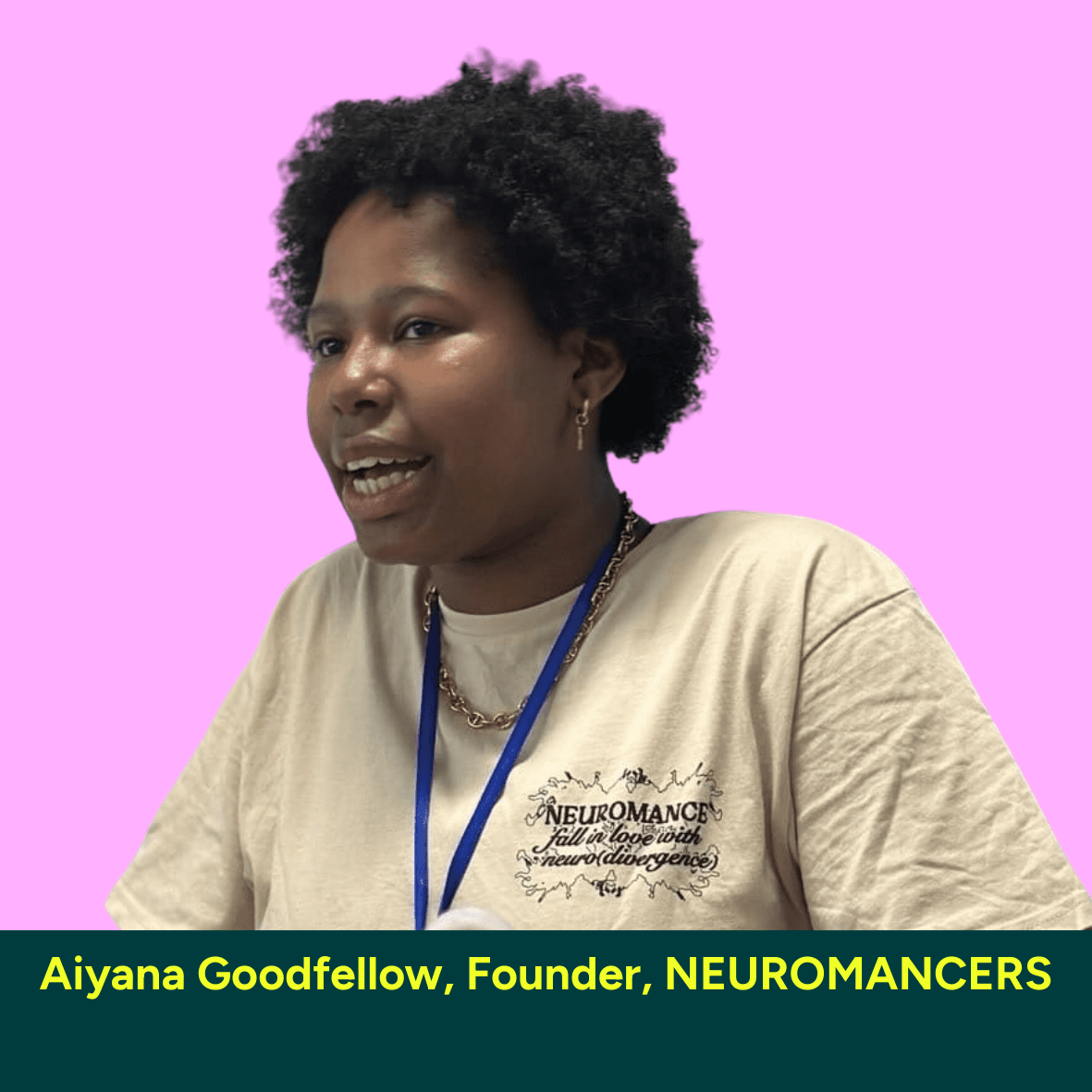
I was fifteen when I found out I was autistic, and finally had a word that explained why I felt “different”.
But, in searching for neurodivergent spaces, I discovered only disappointing narratives encouraging me to assimilate into wider society. Too many of us were underestimating our freedom, framing neurodivergence as something to conquer rather than embrace.
That same year, I founded NEUROMANCERS.
The need to embrace Neurodivergence
I wanted to create a peer-led space for neurodivergent people, a genuinely radical site of care for those disillusioned by mainstream mental healthcare systems.
To NEUROMANCE means to “fall in love with (neuro)divergence”. This means loving every part of yourself, even and especially those parts we are taught are “wrong” or “disordered”. Within NEUROMANCERS, we use a framework that we call “Peer Solidarity”. It’s a form of what many people in mental health spaces call “peer support”, but it combines community healing with political education. Peer solidarity also makes space for both our shared and distinct lived experiences. For example, a Black autistic person will have a different experience to a white autistic person.
Our neurodivergence cannot be separated from our environments, cultures and social systems. My identity as a Black, queer, teenager completely shapes my reality. Whilst not closed off to any particular group, our strategic communities of focus are those experiencing high-level pathologisation; exploring LGBTQ+ identity; navigating racism and anti-Blackness; and young people transitioning to adulthood.
But we are also broadly inclusive, welcoming the “mad”, chronically ill, disabled, and those who may not identify as neurodivergent, but are still excluded by current systems due to the way they think. This is why we use the term “neurodivergent+”, which highlights the wide umbrella this community is meant to shelter under.
Creating spaces that didn't exist
I founded NEUROMANCERS because I couldn’t find a space that resonated with me, but that doesn’t mean radical spaces have never existed. We are inspired by both present-day and historical radical peer support work, including the Black Panther Party’s free medical clinics, and Black activist-scholars like Angela Davis, who encourage us to imagine worlds beyond punishment and incarceration. The latter feels urgently important for neurodivergent people, who have historically been incarcerated in institutions.
We are part of a movement that is creating new, autonomous, affirming systems that are led by the community. Peer support groups and movements like Mad Pride have shown us the power held by those considered “disorderly”, and that we can look after each other without punishing each other.
What five years of peer-led care actually looks like
In the five years since I founded NEUROMANCERS, our team has delivered hundreds of hours of affirming group and 1:1 peer support, directed mini-grants to the most marginalised neurodivergent people, co-led research projects with universities, and much more.
Our peer support offerings are flexible to the divergent needs and desires of those we work with. In 2025, we established our Care Practice Collective, a circle of peers who offer one-off 3:1 care workshops to strategise and support those who need it. For example, if you needed to talk through your housing options, you could request a care workshop and be matched with a trio of peers who will spend the two-hour workshop offering their diverse, creative ideas and leaving you feeling more confident, prepared, and clear on how to move forward.
We created “Death to the DSM”, a peer-led, community based research project creating a lived experience guide to resist mainstream systems of psychiatric diagnosis. Instead, we outline “profiles” and “traits” that neutrally describe even the most pathologised of experiences and temperaments.
This year, we’ve launched our inaugural cohort of the Peer Solidarity Certificate Program, which is the UK’s first programme of politicised peer support. Over ten months, trainees will develop knowledge and tools to better support themselves, their peers, and their community.
Participants will learn through a unique, politicised curriculum built with partner organisations and individuals with lived experience, followed by a six-month practical placement offering care to neurodivergent+ peers. As NEUROMANCERS is youth-focused and founded, we’re offering the programme freely for 18-25-year-olds and investing the sliding-scale donations of older trainees into the next cohort.
To NEUROMANCE means to fall in love with (neuro)divergence — loving every part of yourself, even and especially those parts we are taught are 'wrong' or 'disordered'.
Aiyana Goodfellow
The most important thing NEUROMANCERS has taught me
This summer, thanks to our Spark Award funding from Big Change, we are launching our Peer Helpchat, which takes a consent-led safeguarding approach. When I experienced distress through my teen years, accessing a mix of private and NHS mental health services, instead of being listened to and affirmed, I was told my experiences were “wrong” and even had the police called on me. I became afraid to ask for help at the time I needed it most. I hope that our Peer Helpchat initiative will help people feel able to reach out for support, without fear.
This is the most significant lesson I’ve learnt from NEUROMANCERS: hope. I hope reading this has compelled you to learn more about peer-led mental healthcare and support our work at NEUROMANCERS. I hope we collectively diverge from the norms keeping us trapped. I hope you fall in love with your (neuro)divergence.
Reach out to us at info@big-change.org
We'd love to hear from you!